My Story: Alive and Alcohol Free

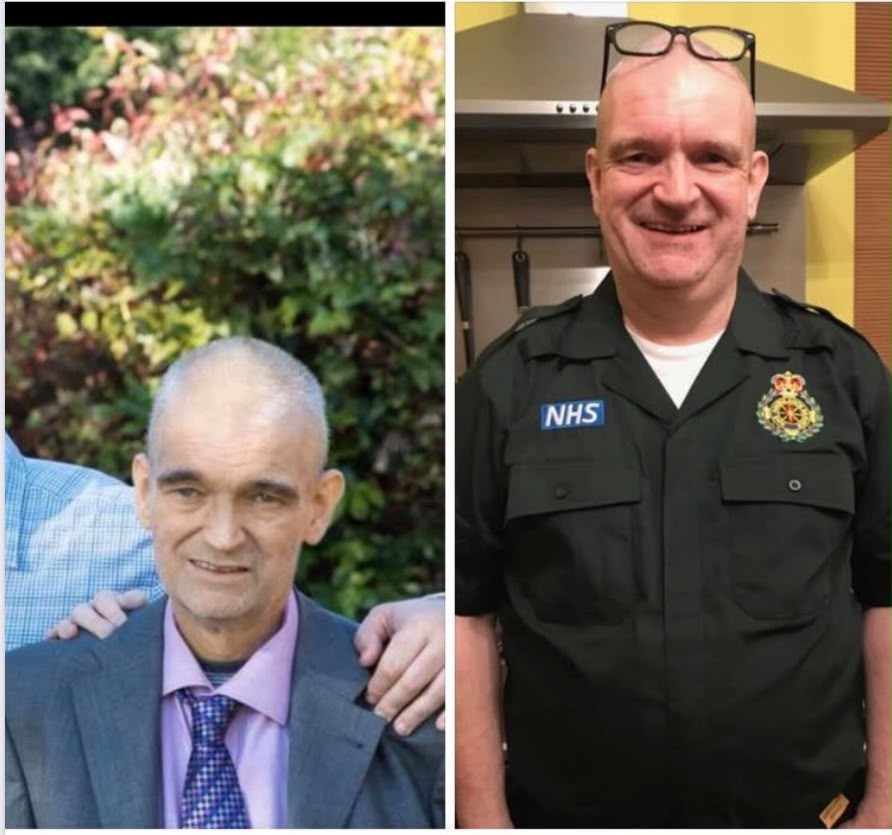
Brian's recovery journey: then and now

For nearly twenty years, drinking was part of every single day. It became my routine, my comfort, my way of unwinding — and slowly, without me even really noticing, it became my whole world.

Family, friends, and my doctors all saw what I was doing. They warned me, again and again. They told me I was hurting myself, that I needed to stop, before it was too late. But I wouldn’t listen. I brushed every concern aside, certain I knew better. “I’ll be okay,” I’d tell them. “It’ll never happen to me.” I told myself.

But it did happen.

I went for what I thought was just a routine follow up appointment. I’d been feeling run down, constantly tired, and always cold — nothing serious, I told myself. But the moment I walked into that doctor’s office, she looked at me and immediately called for an ambulance. My skin had turned yellow. Jaundice. That was the moment the truth could no longer be ignored.

That day was the start of almost five long weeks in hospital. It was terrifying, humbling, and a wake-up call I could no longer turn away from. But the road ahead was longer and harder than I could have imagined. Over the next eleven months, I was admitted into hospital again and again. My liver was failing. There were no more excuses, no more “I’ll be okay.” I was fighting for my life.

Part one

Before Transplant — The Battles I Faced

During those months, my body was overwhelmed by one crisis after another. I faced:

Cirrhosis of the Liver
My liver had become extensively scarred from years of drinking. Healthy tissue was replaced by hard scar tissue, gradually destroying the liver’s ability to function properly.
End-Stage Liver Disease
The final stage. My liver was damaged beyond repair. It could no longer perform its vital roles: filtering toxins, making vital proteins, or helping with digestion. At this point, a transplant was the only option for survival.
Ascites
Huge amounts of fluid built up inside my abdomen, causing severe swelling, weight gain, discomfort, and breathlessness. To manage this, I had three abdominal drains inserted to repeatedly remove the fluid — painful, uncomfortable, and a constant reminder of how unwell I had become.
Abdominal Septic Shock
A life-threatening infection spread through my abdomen and into my bloodstream, causing my blood pressure to crash and my organs to begin shutting down. Survival rates for this condition are only around 60–70%, meaning I was very lucky to pull through.
Sepsis
The infection was caught early but could have overwhelmed my entire body. It could have triggered widespread inflammation, blood clotting, and organ damage — a terrifying, critical condition that carries a high risk of death, especially in someone already weakened by liver failure.
Pneumonia
While I was already seriously ill in hospital, my body was fighting another battle – I developed pneumonia. I was extremely weak and vulnerable and my body was struggling to cope with everything that was happening. Breathing became another challenge at a time when I was already fighting for my life.
Pulmonary Embolism & DVTs
During the early stages of my time in hospital, while I was already seriously ill, doctors discovered that I had a pulmonary embolism — a blood clot that had travelled to my lungs. They also discovered that I had chronic DVTs (deep vein thromboses), meaning I had longstanding blood clots in my veins. It was another frightening development in an already critical situation. I had no idea just how seriously my health had deteriorated or how many things my body was fighting at the same time.
Insertion of an IVC Filter
Surgeons placed a special metal filter inside the main vein in my leg. Its job was to catch any blood clots that broke loose, trapping them before they could reach my brain and prove fatal.
Many Blood Transfusions
As my condition became more serious, I needed multiple blood transfusions to help keep me alive. My body was struggling, and I was becoming increasingly unwell. Seeing the blood being given to me was a frightening experience, because it was another indication of just how serious my condition had become. At the time, I was simply trying to survive. I couldn’t fully comprehend everything that was happening around me or how close I had come to death. Looking back now, the need for repeated blood transfusions is something I will never forget. It was another part of an incredibly difficult period in my life — a period that ultimately changed me forever.
Feeding Tubes through the Nose
I became too weak and unwell to eat properly. A tube was passed through my nose and down into my stomach to deliver vital nutrition, keeping me alive when I could not swallow or eat.
Several Endoscopic Procedures
During the early days of my illness, doctors carried out numerous investigations to try to understand just how seriously my body had been affected. I underwent several endoscopic procedures, including examinations through my throat and examinations of my digestive system from the other end. These procedures were necessary to look for bleeding, damage and other complications, and to give the medical team a clearer picture of what was happening inside my body. At the time, there seemed to be test after test, procedure after procedure. I was seriously ill, frightened and exhausted, and I had little idea of what the next examination would reveal. These investigations helped doctors understand the extent of the problems I was facing and determine how best to treat me.
Part two

The Liver Transplant — And the Fight Continued

In 2018, I received the greatest second chance I could ever have been given: a liver transplant.

But the journey didn’t end there. My new liver brought me life, yet my body still had many hurdles to cross. Scar tissue, complications, and new health challenges meant I was back in hospital, undergoing further procedures and facing yet more conditions:

Six ERCP Procedures
A specialised endoscopic procedure where a camera is passed down through the mouth, into the intestines, and up to the bile ducts. On three separate occasions, doctors inserted stents to widen my bile ducts caused by the scar tissue and allow bile to flow freely, then later removed those stents in the hope that the widening of the bile ducts was permanent (which it was not).
Two Liver Biopsies (Post-Transplant)
After my transplant, my liver began showing signs of rejection — meaning my body's immune system was trying to attack and damage my new liver. To confirm what was happening and guide my treatment, I underwent two liver biopsies. A long needle was inserted through my ribcage into my liver to remove small samples of liver tissue so they could be examined closely under a microscope. The results helped my medical team adjust my immune suppression medication and protect my new liver, giving it the best chance of surviving and functioning well.
Roux-en-Y Hepaticojejunostomy
Major reconstructive surgery on my bile ducts. Scar tissue had formed after the transplant, blocking the flow of bile. Surgeons rebuilt my entire biliary system, rerouting and reconnecting my bile ducts to a loop of intestine to create a new, clear pathway — allowing bile to flow normally again.
Squamous Cell Carcinoma (Skin Cancer)
A form of skin cancer that developed, linked to the long-term immune suppression medication I must take to protect my new liver. It required treatment to remove the cancerous cells and keep my body safe.
Secondary Diabetes (treated as Type 1)
I developed insulin-dependent diabetes, a lifelong condition likely triggered by the trauma to my body. My pancreas no longer produces enough insulin on its own, so I must inject insulin multiple times every single day, carefully monitoring my blood sugar to stay healthy.

Today

Where I Am Today

Every single one of these complications — before and after my transplant — was a battle. I survived conditions that many do not. I survived when the odds were stacked against me. I have been cut, treated, scanned, and monitored more times than I can count.

But I am here.

Today, I am alive and alcohol free. I carry the lessons of those twenty years with me every single day — the mistakes, the warnings I ignored, the fear, and above all, the gratitude. My life is a gift I never take for granted.

I know now that it can happen to anyone — and when it does, it is never too late to change, to heal, to fight through every complication life throws at you, and to start living truly alive.

If my story sounds familiar, you don’t have to face it alone.